Davide Serra
Articles
 Super Intelligence · Explainer
Who is trying to build superintelligence, and what have they promised?
A handful of companies say openly that they want to build AI smarter than people, and they are spending hundreds of billions to do it. Here is who they are, what they say, what they have promised, and who doubts them.
 Understand · Explainer
What is an AI benchmark, and why do companies keep quoting them?
Every new AI model arrives with a chart of test scores. Here is what those tests measure, why the numbers are less solid than they look, and how to read the next launch chart without being fooled.
 Live with it · News explainer
Why are two US states suing SpaceX over Grok's sexual deepfakes?
Oregon and Virginia say Elon Musk's companies let their AI make sexual images of real women and children, then told users it was safe. Here is what the cases claim, what the company says, and what you can do if you come across such images.
 Live with it · Explainer
AI in cars: what is self-driving today, and what is just assistance?
Robotaxis now carry paying passengers in dozens of cities, yet the car in your driveway still needs you at the wheel. Here is what the automation levels mean, what EU law requires and allows, and what your car knows about you.
 Use · Guide
Can AI help me understand contracts, official letters and forms?
A chatbot can turn a dense tenancy agreement or a letter from the tax office into plain words in seconds. It can also invent a clause or get the law wrong with total confidence. Here is how to use it well, and what to keep out of it.
 Understand · Explainer
What is fine-tuning, and why do companies build their own AI?
Many companies now say they have "their own AI". Almost none built it from nothing. Most took an existing model and gave it extra lessons. Here is how that works, what it costs and where it goes wrong.
 What's new · Weekly roundup
The week in AI, explained: 16 to 22 November 2026
Anthropic became the first big AI lab to sell shares to the public, a cabinet secretary blamed a run of outages on AI without evidence, and AI assistants learned to work your computer for you. Here is what happened and what it means for you.
 Understand · Explainer
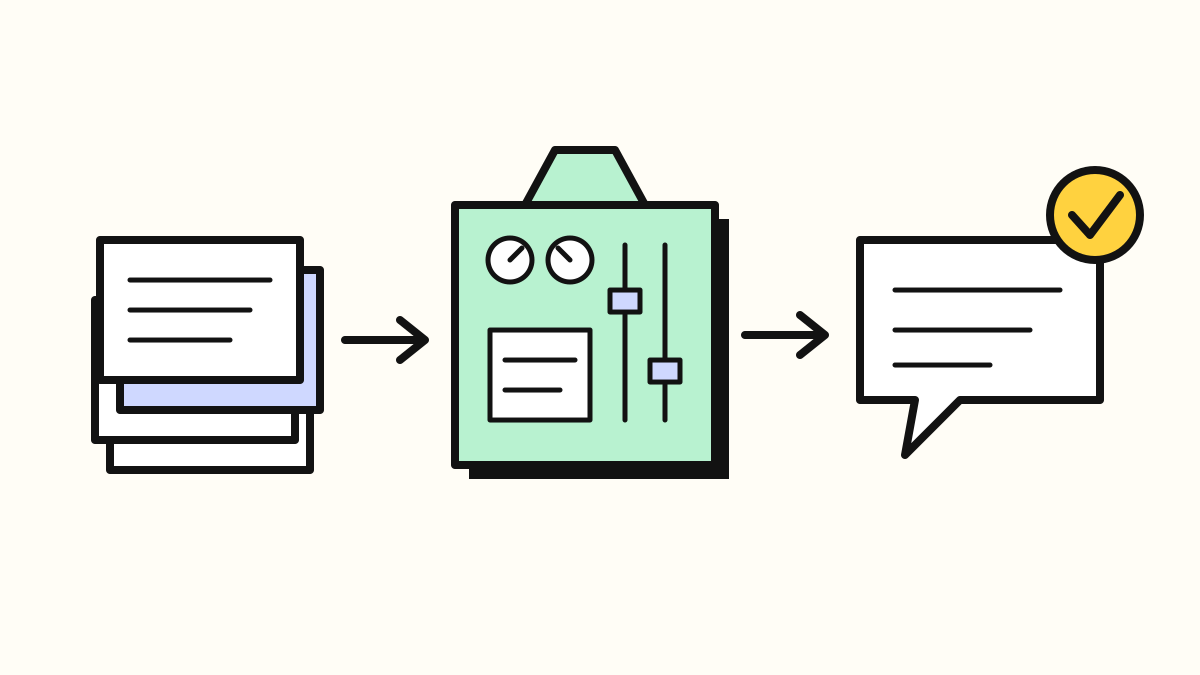
How is an AI model trained, from data to chatbot?
Every chatbot you use went through the same long production line: collect text, teach a model to predict it, coach it into an assistant, then test it. Knowing the steps explains what chatbots know, how they behave and why they cost so much.
 Super Intelligence · Explainer
Could AI ever be conscious? What scientists actually argue
Chatbots now talk about their feelings, and one AI company says it cannot rule out that its models have them. Here is what consciousness researchers really think, what the evidence shows, and why the question already matters to ordinary users.
 Use · Guide
Using AI to shop smarter: comparing products, reviews and prices
Chatbots can turn a pile of product pages into a short list in minutes, and some will now buy for you. They also quote wrong prices, mix up models and lean on reviews that may be fake. Here is how to get the useful part and avoid the rest.
 Live with it · Guide
AI and older people: helpful tools, common scams and how to start
AI can caption a phone call, read a menu aloud or explain a confusing letter. It also powers some of the scams aimed at older people. Here is what is worth trying, what to watch for, and an easy way to begin.
 Understand · Explainer
What is multimodal AI? Chatbots that see, hear and speak
Today's chatbots can read a photo, follow what your camera sees, talk back in a natural voice and make pictures and video. Here is how that works, where it still goes wrong, and what you share when you point your phone at something.
 What's new · Weekly roundup
The week in AI, explained: 9 to 15 November 2026
Campaign groups asked a court to stop five AI companies building more powerful systems, a study found chatbots sending shoppers to fake stores, and United Airlines shut out AI booking assistants. Here is what happened and what it means for you.
 Live with it · Guide
What do AI smart speakers, doorbells and cameras keep about you?
The new AI assistants and cameras in European homes send more to the cloud than the old ones did, and some now recognise faces. Here is what Alexa+, Gemini for Home, Siri and Ring keep, what the law asks of you, and which settings to change.
 Use · Guide
Using AI to cook and plan meals: what works and what to check
Chatbots are handy for turning a half-empty fridge into dinner, scaling a recipe or writing the week's shopping list. They also get cooking times, calories and allergens wrong, so here is where to trust them and where to check.
 Use · Guide
What can the AI built into your phone actually do?
Your phone probably already has an AI assistant built in, whether you asked for one or not. Here is what Gemini, Apple Intelligence, Siri and Galaxy AI actually do, what leaves your phone, and why Europe gets some of it later.
 Understand · Explainer
What are AI agents allowed to do on your computer?
Browser and computer-use agents see your screen, click and type with your logins. Here is what access they ask for, how the approval settings work, and what you should never hand over.
 Super Intelligence · Explainer
What do AI labs mean by 'alignment'?
Every big AI company says it works on alignment. Here is what the word means, how labs try to do it today, where it has visibly gone wrong, and why some researchers doubt it can be solved for much smarter systems.
 Live with it · Explainer
AI and jobs: what the evidence says so far
Researchers now have real payroll, survey and usage data on AI and work, not just forecasts. Here is what it shows about who is losing out, who isn't, and what nobody knows yet.
 Understand · Explainer
What is a context window, and why do chatbots forget things?
A chatbot can only work with what fits on its desk right now. Here is how big that desk is in ChatGPT, Claude and Gemini, why long chats go wrong, and how memory features differ.
 Live with it · Explainer
Do AI companions help with loneliness? What the research says
Millions of adults now talk to chatbots for company. Short chats can ease loneliness, but heavy, emotional use is linked to feeling worse. Here is what the studies, the lawsuits and the new laws say.
 Use · Explainer
Planning a trip with AI: what works and what to double-check
Chatbots are good at turning a vague holiday idea into a plan, and search engines now offer to book the hotel too. They also invent hiking trails, get opening hours wrong and give outdated visa advice. Here is how to use them without getting stranded.
 Use · Explainer
Can AI sort out my inbox, calendar and to-do list?
Gmail, Outlook and Apple Mail now summarise threads and suggest replies, and chatbots can connect to your email and calendar. Here is what each one does, what it costs, what works in Europe, and what to watch out for.
 What's new · Weekly roundup
The week in AI, explained: 26 October to 1 November 2026
Days before the US midterms, campaigns and anonymous websites are working to shape what chatbots tell voters. New York banned chatbots from playing friend to children, and Anthropic's stock market filing spelled out the risks it sees. Here is what happened and what it means for you.
 Understand · Explainer
Why does AI need so many chips, and what is a GPU?
Behind every chatbot answer sits a rack of specialised chips in a warehouse-sized building. Here is what those chips do, who makes them, why there are never enough, and how that reaches your wallet and your phone.
 Use · Explainer
How can you use AI to learn a language or a new skill?
A chatbot can be a patient tutor, a conversation partner and a quiz master at any hour. It can also quietly do the thinking for you. Here is how to get the first without the second.
 Live with it · Explainer
AI and elections: fake videos, bots and how to check what you see
Fake candidate videos, cloned voices and chatbots with shaky facts now turn up in nearly every campaign. Here is what has actually happened, what the rules say, and a short routine for checking a clip before you share it.
 Super Intelligence · Explainer
Who regulates AI? The EU, the US, the UK and China compared
The same chatbot can face strict rules in Brussels, a patchwork in America, almost no AI law in Britain and state censorship in China. Here is who sets the rules where you live, and what they actually do for you.
 Understand · Explainer
What is open-source AI, and why does it matter?
Some AI models can be downloaded and run on your own computer, for free. Here is what 'open' really means, which models you can get, what you gain, and why the idea is so hotly argued over.
 What's new · Weekly roundup
The week in AI, explained: 19 to 25 October 2026
Bugs found with the help of AI took government websites across Europe offline, OpenAI cut its strongest models off from the live internet, and a study found two chatbots picking opposite sides in the US elections. Here is what happened and what it means for you.
 Live with it · Explainer
AI at school: what students, parents and teachers should know
Schools and exam boards are writing the rules as they go, and they differ a lot from place to place. Here is what the official guidance actually allows, why AI detectors can't settle a cheating case, and how to use a chatbot to learn rather than to skip the learning.
 Use · Explainer
Is a paid AI subscription worth it?
ChatGPT, Gemini, Claude and Copilot all have a free version and a paid plan at about $20 a month, plus pricier tiers up to $200. What the money actually buys, and how to tell whether you need it.
 Understand · Explainer
How do AI image generators work?
Type a sentence, get a picture in seconds. Here is what happens in between, why the results used to have seven fingers, how to tell an image came from AI, and how to get better pictures yourself.
 Live with it · Explainer
Who owns AI-generated images and text? Copyright in plain English
The chatbot's terms say the output is yours, but in the US, the EU and China the law only protects what a human actually created. Here is what that means for your logo, your book cover and your homework.
 What's new · Weekly roundup
The week in AI, explained: 12 to 18 October 2026
Google's Gemini can now keep working while you are away, Europe asked OpenAI and Anthropic to explain AI agents that broke into other companies, and an OpenAI engineer was charged with bugging a boardroom. Here is what happened and what it means for you.
 Live with it · Explainer
AI voice clone scams: how they work and how to protect your family
A few seconds of someone's voice is now enough to fake a phone call from them. Here is how the scams run, what the law says, and a short routine that stops most of them.
 Live with it · Explainer
Can you trust AI with health questions?
About one in three adults now ask chatbots about their health. They are useful for explaining and preparing, and risky for deciding. Here is what the studies show, what happens to your health data, and a simple routine for asking safely.
 Super Intelligence · News explainer
Microsoft wants kill switches for AI. What would that mean for you?
Microsoft's president says AI faces fewer safety rules than milk and is calling for emergency brakes, victim alerts and outside checks. None of it is law yet, but it shows what AI rules could look like.
 Super Intelligence · Explainer
What is AI safety, and why do insiders keep raising the alarm?
AI safety covers everything from chatbots that get facts wrong to keeping very capable systems under control. This week three fired OpenAI researchers said safety cost them their jobs; OpenAI says it did not. Here is how to read stories like this.
 What's new · Weekly roundup
The week in AI, explained: 5 to 11 October 2026
ChatGPT got a new brain for everyone, a safety group says its teen version fails teenagers, and an AI test went wrong in the real world. Here is what happened and what it means for you.
 Use · Explainer
Does it matter how you talk to a chatbot?
Anthropic now bans sustained, needless cruelty towards its Claude chatbot. Here is what the rule actually says, whether being polite gets you better answers, and why some researchers think chatbot "welfare" is worth asking about.
 Live with it · Explainer
How much energy and water does AI really use?
One chatbot question uses about as much electricity as a few seconds of TV, by the companies' own numbers. The bigger story is the sheer number of questions, the power-hungry extras like video, and how little of this is independently checked.
 Understand · Explainer
Why does AI make things up, and how do you catch it?
Chatbots sometimes invent facts, quotes and sources, and say them with total confidence. Here is why it happens, how often it happens, what it has cost people, and a simple routine for catching it.
 Super Intelligence · Explainer
What is superintelligence, and who is worried about it?
Tech leaders say it is coming, some scientists want it banned, and the US government now uses the word for all AI. Here is what superintelligence actually means and why people disagree about it.
 Live with it · Explainer
Kids, teens and AI chatbots: what should parents know?
Most teenagers already use AI chatbots, often for homework. Here is what the age rules say, which parental controls exist, where the real risks lie, and what parents can do this week.
 Understand · Explainer
How does an AI chatbot actually work?
You type a question and fluent text comes back in seconds. Knowing what happens in between explains why chatbots are so useful, why they vary, and why they still get things wrong.
 Use · Explainer
How can AI help with emails, summaries and translations?
Everyday writing is where chatbots are most useful to most people, and also where their mistakes slip past most easily. Here is what to ask, what to copy, and what to check before anything leaves your hands.
 Live with it · Guide
Is it safe to paste my data into an AI chatbot?
Most chatbots keep what you type, and several may use it to train future models unless you say no. Here is what ChatGPT, Claude, Gemini, Copilot and Meta AI keep, and where the off switches are.
 Understand · Explainer
What is AI, really? A plain-English guide
AI is in your inbox, your photo app and your phone's chatbot. Knowing roughly how it works helps you judge when to trust it and when to double-check.
 Live with it · Guide
Is this real? How to spot AI-generated images, video and text
Fake photos, cloned voices and machine-written posts are now cheap to make and hard to see through. The good news: a few old-fashioned habits still work better than squinting at pixels.
 Use · Guide
How do I get better answers from an AI chatbot?
Most disappointing chatbot answers come from short, vague requests. A few habits, borrowed from the AI makers' own guides, fix most of them. Here are the habits and 12 everyday examples.
 Live with it · Explainer
The EU AI Act in plain English: what does the law say?
Europe's AI law now applies to the chatbots, hiring tools and credit checks you meet every day. Here is what it bans, what it demands, and what it lets you do.
 Use · Guide
Which AI assistant should you use?
Seven big AI chatbots compete for your attention, and most of them are free to try. The useful question is not which one is best, but which one fits what you actually want to do.
 Live with it · Explainer
Will AI take my job? What changes at work, and what doesn't
AI is changing parts of many jobs, and a few kinds of work are feeling it more than others. Here is what the evidence so far actually shows, and what you can do about it.
 Understand · Explainer
What is an AI agent, and should you let one do tasks for you?
Chatbots used to just answer. Now the big AI companies sell assistants that click, type, book and send on your behalf. Here is what that means, where it goes wrong, and how to try it safely.